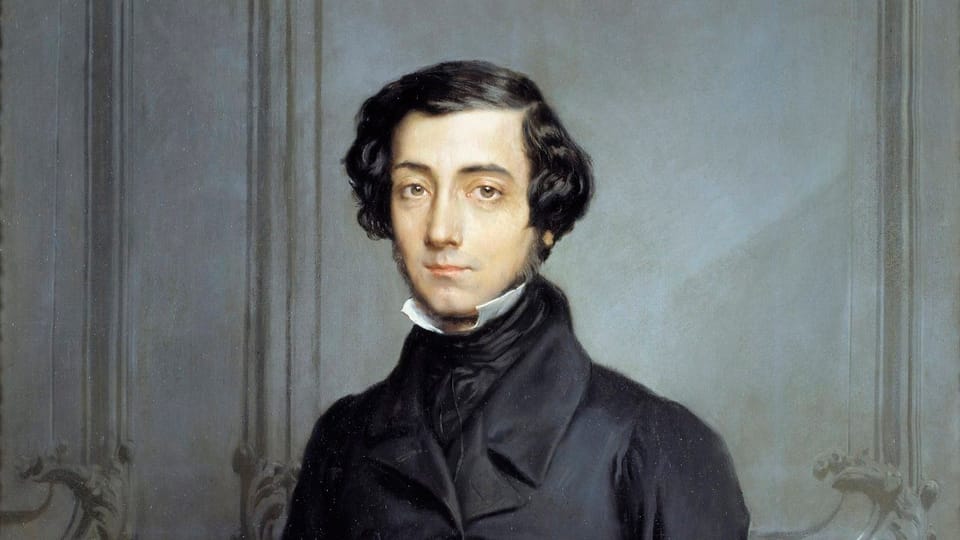
Tocqueville's diagnosis of the contented citizen holds up. His fear of the unlimited majority does much less well, and a week of close counts is no test of either.
In 1840 Alexis de Tocqueville described a government that would be "absolute, minute, regular, provident, and mild." He meant it as a warning. The power he pictured has no villain and no jackboots. It looks after its citizens, and they let it.
Read it in the week of 7 November and the contrast is plain. New Zealand went to the polls and could not say who had won. Christopher Luxon, the prime minister, told supporters: "We have a pathway to forming the next Government, but it is too close to call". Chris Hipkins, the Labour leader, told his own supporters that every vote mattered and had to be counted. Three days earlier, AP reported, in a copy on PBS NewsHour, that Democrats had won control of the US House in addition to the Senate.
Neither scene looks like the quiet servitude Tocqueville feared. That is the trap in reading him against the news: the book is about a condition that an election week cannot show.
The first volume appeared in 1835, in the English of Henry Reeve, as the Project Gutenberg text records. The second, prefaced in March 1840, is the one that matters now.
What the book argues
The argument has two stages, and they pull against each other. In the first volume the majority is both engine and danger. The chapter on its unlimited power rests on a flat premise: "The very essence of democratic government consists in the absolute sovereignty of the majority". Part of that chapter is headed "Tyranny Of The Majority".