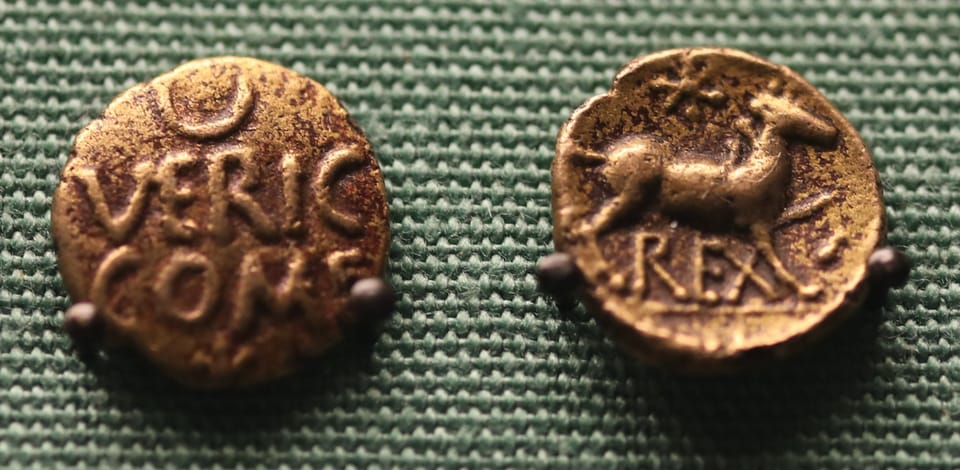
The ruler who gave Rome its pretext to invade Britain in AD 43 may have been a woman, and the proof offered is a coin design, a name ending and a Latin title. On 4 November 2026 Bournemouth University announced on EurekAlert research by Dr Miles Russell, its Director of Archaeological Fieldwork, concluding that Verica, long taken for a king, was female.
Verica ruled the Atrebates, in what the release places in Hampshire and West Sussex. Around AD 40 he, or she, lost power and fled to Claudius. That much is the standard story. What is new is the sex, and the novelty rests on a single scholar. The university release names no peer-reviewed journal, and no independent scholarly response appears in the coverage. Russell makes the case in a Current Archaeology feature that presents Verica as a lost queen of the British Iron Age. Treat it as an interpretation, offered for testing.
Start with what Russell says the coins show. The release describes a feminine, bare-breasted rider on horseback, unlike the male warriors on other British Iron Age coins. The Latin word rex on the coinage he reads as a sign of rule with the emperor's authorisation, and he insists that "rex is a nongender specific title". Then the name. archaeologymag.com, in a copy of the Bournemouth release, paraphrases the point: women's names of the period often ended in the letter a, as Cartimandua and Boudica did. No outside expert is quoted there.