Two Nature papers published this month trace Celtic and Germanic ancestry across Europe. The Norwegian result in them bears directly on the idea that a people and its language travel together.
In Denmark and southern Sweden, according to the University of Gothenburg, “People from northern Germany largely replaced the local population in Denmark and southern Sweden.” The university dates that movement to around 1,600 years ago. Next door, the picture is different. Leiden University reports that “The population in Norway, by contrast, appears to have remained largely unchanged.”
If genes and language moved together, Norway should have stood apart from the linguistic change in Denmark and Sweden. It did not. The authors of the papers, writing in a piece reposted by Nation.Cymru, say that “pre-Viking Age Norwegians still participated in the linguistic changes that gave rise to Old Norse.” Population replaced in one place, population unchanged in another, and one shared linguistic outcome.
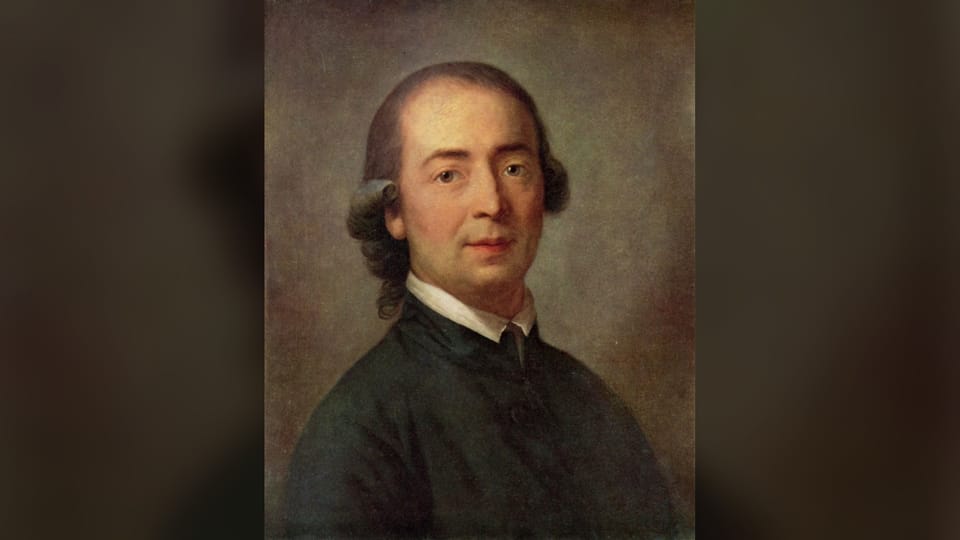
We hold that the new DNA establishes movements of people with unusual force, and leaves the movement of languages as a hypothesis, which the authors themselves state as one. The equation of language and people, usually attributed to Johann Gottfried Herder, is the assumption that turns the first into the second. Norway shows where the assumption stops working. It also shows that Herder, read through the Stanford Encyclopedia of Philosophy rather than through his later reputation, never needed it to be a law of genes.
What the two papers report
Two papers, led by Copenhagen and Leiden, appeared in Nature on 4 November 2026, as the University of Gothenburg records. One concerns the Germanic languages and carries the title “Tracing the spread of Germanic languages using ancient genomics”, according to the University of Copenhagen release as EurekAlert carries it. The other concerns the Celtic languages.
The scale is large. The Copenhagen release, as reprinted by Popular Archaeology, speaks of “more than 4,500 ancient individuals, including 712 genomes sequenced for the first time”. Leiden counts differently: the DNA of 712 ancient humans, set beside more than 4,000 earlier profiles. Both agree on the 712 new genomes.
On the Celtic question, the Gothenburg page says: “The ancient DNA points to a movement of people from central Europe around 3,000 years ago.” The Copenhagen release, per Popular Archaeology, describes that movement as spreading west into France, Britain, Ireland and the Iberian Peninsula. The same release presents the finding as a challenge to the Atlantic-coast theory of Celtic origins, which it calls “one of the most influential theories”, according to EurekAlert. It adds that Celtic languages were spoken across much of Europe 2,500 years ago and now survive mainly in Ireland, Wales, Scotland and Brittany.
The Germanic result is stranger, and the authors say so. The Gothenburg page reports a previously unknown migration into Scandinavia about 4,000 years ago, and then hedges in the same sentence: “they may have carried the earliest ancestor of today’s Germanic languages.” The same page says the newcomers “likely arrived from areas around the Baltic Sea and spread rapidly across Scandinavia.” Leiden describes another group arriving in Sweden “800 years after the steppe migrants, probably from what are now the Baltic States.” Hugh McColl, lead author at Copenhagen, told IFLScience: “This migration came as a real surprise.” Guus Kroonen, the comparative linguist on the project, called it to Leiden “a completely unexpected discovery.”
Dating this against earlier belief is where the sources part. The Copenhagen release, per Popular Archaeology, sets the finding against an assumption that Germanic roots arrived about 5,000 years ago, a gap of roughly a thousand years. Leiden measures its gap from the steppe migrants instead. The two use different base dates, and the gaps cannot be laid end to end.