Novaya Gazeta says a lease and bank refusals did what a ban would. According to its own statement, the Moscow paper was due to leave its office and shut its servers on 9 November, after its landlord ended the lease and, its editor says, banks fell into line. No report we opened shows who, if anyone, gave the order. Milton's case against licensing fits the method, though he wrote against a printing order, not a lease.
What did Novaya Gazeta say it would do?
It said it would go dark. "On November 9th, we will turn off the lights in the home where we have lived for 30 years," the paper announced on 30 October, in a statement carried by Novaya Gazeta Europe. The staff would "shut down our servers, and leave".
The editor-in-chief, Sergey Sokolov, gave the same timetable in an interview first published in Bereg and republished by Meduza. "We're working until November 9 — fulfilling our last obligation to our readers," he said. "Then we're shutting down the servers and heading out into the street, with nowhere to go."
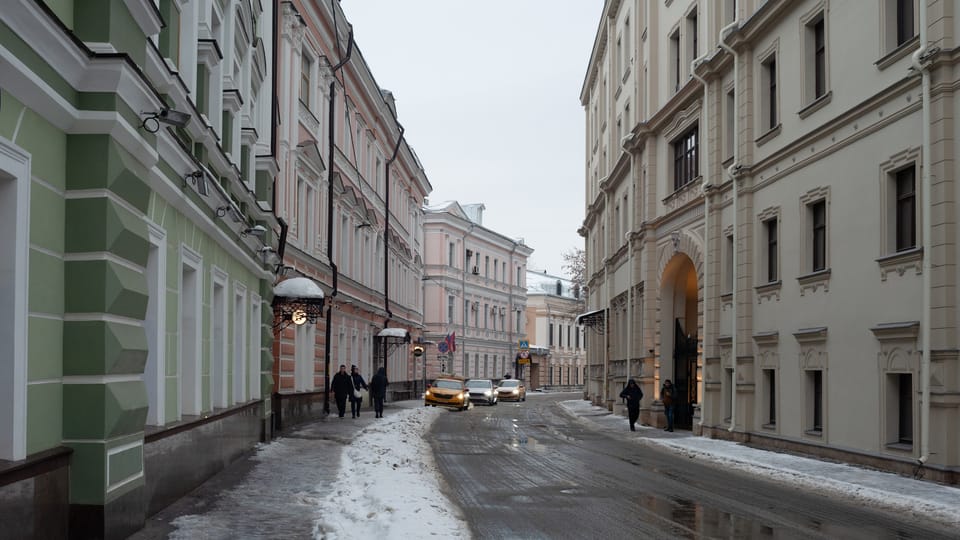
Mediazona, in a report on 29 October, said the editorial team had been given until 9 November to vacate its office on Potapovsky Lane. It credited RBC and Echo with the first report. Mediazona quoted a letter from Sokolov dated 28 October: "A move to nowhere lies ahead. We have become refugees in our own country."
No outlet we opened reports the day itself; the paper was due to leave on 9 November.
How can a paper be closed without a ban?
The accounts describe three instruments, each with its own owner and its own stated reason.
The first is the lease. Novaya Gazeta Europe, copying an Economist report, said management was told on 19 October that it would be evicted from its building on Potapovsky Lane. Sokolov described it in plain terms: "They have the right to terminate the lease, and they're terminating it." And: "We're being given a month to move out." Sokolov says in the Meduza interview that the building belongs to Moscow City Hall; the Economist copy and Mediazona do not name the landlord.
Banks come next. Mediazona, citing Sokolov, reported that banks and corporate partners refused to process readers' donations, and gave the reason as internal corporate rules. Sokolov put it differently in the Meduza interview: "Our banks do as they're told, because today you're a banker, and tomorrow you're on a prison bunk." He did not name an order. His claim is that fear does the work. The banks' stated reason and the editor's explanation are two accounts, and nothing in the reports settles between them.
Then the label. Mediazona wrote that Russia's Justice Ministry branded the paper a "foreign agent" in September 2026. Sokolov, asked about the circumstances of the closure, said: "When the online publication Novaya Gazeta was labeled a “foreign agent,” we knew perfectly well this might come up." Il Foglio, in an English edition translated by AI, linked the label to the blocking of reader donations. The September date rests on Mediazona alone, and Sokolov's wording refers to the online publication.
There was pressure on the person as well. Reuters reported, in a copy on Internazionale, that investigators questioned Sokolov on 15 October after raiding his home. It cited TASS, which described a case of "unlawful use of personal data". None of these reports carries an official statement on the eviction or the bank refusals. TASS, as relayed by Reuters, is the only official account in them, and it concerns the data case.
What did Milton say about licensing?
Milton's Areopagitica is a speech to Parliament, titled "A Speech for the Liberty of Unlicensed Printing to the Parliament of England". Its target was an order that "no book, pamphlet, or paper shall be henceforth printed, unless the same be first approved and licensed."
His objection was to the gate, not only to the punishment. "Who kills a man kills a reasonable creature, God's image; but he who destroys a good book, kills reason itself," he wrote. Truth, in his account, is not something an office can hold: "Truth and understanding are not such wares as to be monopolized and traded in by tickets and statutes and standards." And he trusted the open contest: "Who ever knew Truth put to the worse, in a free and open encounter?"
Our reading is that the parallel lies in the gate. Under the order Milton opposed, a paper needed an official's approval before it could exist. In Sokolov's account, Novaya Gazeta's survival now needs a landlord's approval and a bank's. The effect is the one Milton feared: the encounter never takes place, because the paper is not in the room. The analogy is ours. Milton wrote about a printing order, not about the economics of keeping a newsroom open.
What is the strongest objection?
That nothing here is licensing at all. Sokolov himself conceded that a lease can lawfully end: "They have the right to terminate the lease." Mediazona's account gives the banks' reason as internal corporate rules, not an instruction. And TASS, as relayed by Reuters, limited its case against the editor to personal data. On this reading the paper faces commercial decisions and an unrelated inquiry.
Sokolov answers that these decisions are not independent of the state. He describes the banks as obedient rather than free. That is his claim alone. The September label, which Mediazona attributes to the Justice Ministry, is an official act, and Il Foglio ties it to the blocked donations. But no report we cite shows who told the landlord or the banks to act, or whether anyone did.
Our position is conditional: if Sokolov is right that banks obey, the effect is licensing without a licence, whatever the stated reasons. Milton's argument concerned what a gate does to truth, not who built it. The case would weaken if a landlord or bank gave a reason on the record that had nothing to do with the paper's status, and it would strengthen if an instruction were ever shown.
Has Novaya Gazeta come back before?
Sokolov says it has. "Novaya Gazeta has already shut down twice," he told the Bereg interviewer. "Every time Novaya Gazeta has shut down, it has eventually come back. We've risen from the ashes before." The interview does not say which two closures he means.
Il Foglio's English edition quoted Muratov as saying "They have killed us". Sokolov, in the interview published the day before, says the paper has returned before. Those are two readings of the same week, and only time will test either.
Where to read next
- Novaya Gazeta Europe: the paper's own announcement of 30 October.
- Meduza: Sokolov's full interview, on banks, the lease and what comes next.
- Mediazona: the eviction report and Sokolov's letter.
- Il Foglio: an AI-translated English edition of its 31 October editorial.
- Project Gutenberg: the full text of Areopagitica.
- Indonesian police name three officers as suspects in wiretapping case: our earlier briefing.
- Paraguay president Peña removed: Machiavelli's test of accusation: our earlier briefing.
Watch for the first issue or website update after 9 November, and for any landlord or bank that states its reason on the record.