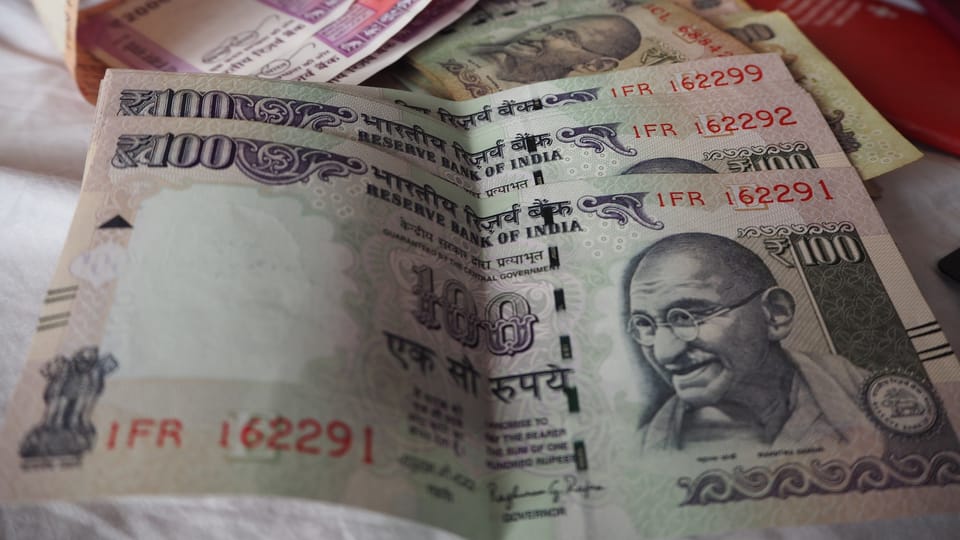
India's overseas direct investment is growing much faster than foreign investment into India, yet inward stock is still about four times larger. The Reserve Bank of India says the ratio of inward FDI to outward investment fell to 4.2 times at end-March 2026 from 5.5 a year ago. The gap is narrowing, as it did a year earlier; the balance has not changed.
What did the Reserve Bank of India actually report?
On 6 November 2026 the Reserve Bank published its census on the foreign liabilities and assets of Indian direct investment entities for 2025-26. Its tables put the outstanding stock of Indian overseas direct investment (ODI) at Rs 16,71,463 crore, or Rs 16.71 lakh crore, at end-March 2026. A year earlier it was Rs 11,86,744 crore. Inward direct investment stood at about Rs 70.7 lakh crore, and KNN India reported that this stock grew 8.5 per cent. The census covers 43,123 entities that reported FDI and/or ODI.
The headline growth rate for ODI, 40.8 per cent, is not in the RBI's release. It is a calculation from the RBI's table, and three outlets printed it: ANI, IANS and KNN. ANI described the rise, in a copy on Devdiscourse, as "marking an increase of around 40.8 per cent." Dividing the RBI's two table figures gives the same answer. It is a change in rupee terms.
The sentence that carries the story is the RBI's own: "the ratio of inward FDI to ODI moderated to 4.2 times as on end-March 2026 from 5.5 times a year ago". Dividing the inward stock by the outward stock, as the RBI reports them, also lands at about 4.2.
What does the ratio show, and what does it leave out?
It compares two stocks: the outstanding value of foreign direct investment in Indian entities, and the outstanding value of Indian direct investment abroad, each at a single date. A stock that is four times the size of another moves slowly, which is why a 40.8 per cent rise against 8.5 per cent shifts the ratio from 5.5 to 4.2 and no further.
Read that way, the ratio is a useful summary and a poor forecast. It says how large one stock is against the other today. It does not say whether next year's additions will close the gap or widen it, and it does not say which firms or sectors drove the change.
Stock is not flow. Changes in stock need not match the flows recorded in India's balance of payments, so the census is not a count of the money sent abroad in 2025-26.
Nor is the pattern new. Hellobanker, reporting the previous census, quoted the RBI as saying that "the growth of ODI (17.9 per cent) outpaced the growth of FDI (11.1 per cent)" in 2024-25. Outward investment has now outgrown inward investment in two successive censuses. What changed this time is the margin.
The census also shows where the capital sits. The United States was the largest source of inward FDI at 16.5 per cent, in the RBI's words "followed by Mauritius". On the outward side, KNN reported that "Singapore, the UAE and the US together accounted for more than half of India's outstanding ODI." The United States therefore appears on both lists. These shares describe a position at one date, not a trend.
What would Adam Smith make of it?
Smith gave this question its classic form. In Book IV, chapter II of The Wealth of Nations (1776, on Econlib), he argued that, other things equal, an investor keeps his capital at home. The condition matters: the preference holds when profits abroad and at home are equal, or nearly so.
The same chapter gives us the invisible hand. An individual employing capital in support of domestic industry is, Smith wrote, "led by an invisible hand to promote an end which was no part of his intention". The hand works through the home preference, so Smith is no simple champion of free capital outflows.
His frame still fits the number. A ratio falling from 5.5 to 4.2 means that Indian capital abroad is growing faster than foreign capital at home. On Smith's terms, that implies Indian firms found returns, or strategic reasons, abroad strong enough to outweigh the pull of home. That is our reading of Smith, not his verdict on India: he sets a preference for home employment at equal or nearly equal profits, and he gives no judgment on India.
Here the concept strains. Smith's passage concerns an individual investor's choice. The census counts stock held by entities, 43,123 of them reporting FDI and/or ODI, a different unit from the single investor Smith had in mind.
What is the strongest objection?
No outlet we opened calls India a capital exporter; the objection is ours, to the framing of this piece's own title. A ratio of stocks can fall because the smaller stock grew fast, not because more is leaving India than arriving. Inward stock, at about Rs 70.7 lakh crore, is still more than four times the outward stake of Rs 16.71 lakh crore.
On stock data, then, India remains a net importer of direct investment whose outward stake is growing faster. Flows in the balance of payments could tell a different story, and the census does not settle it. The 4.2 measures relative size at one date; the growth gap, 40.8 against 8.5 per cent, explains why it moved. The next census will show whether the ratio keeps falling below 4.2 and whether ODI growth stays above 8.5 per cent.
Where to read next
- Reserve Bank of India: the census release and its tables.
- Devdiscourse: ANI's report on the ratio, in a copy.
- Investment Guru India: IANS's report, in a copy.
- KNN India: the 8.5 per cent inward growth and the destination shares.
- Econlib: Smith's Book IV, chapter II, in full.
- PhiloCrux: our earlier explainer on Asia's chip stocks.
- PhiloCrux: our earlier explainer on the Cuban peso.