The Architecture of Desolation: Schopenhauer and the Metaphysics of Suffering
The Scream at the Heart of Silence
There is a moment, often arriving in the hollow hours before dawn, when the scaffolding of purpose suddenly collapses. The career, the affections, the striving—all of it appears as a thin veneer painted over an abyss. It is not depression in the clinical sense; it is a raw, metaphysical vertigo. In that moment, you haven’t simply had a bad day. You have glimpsed, as Arthur Schopenhauer would insist, the naked structure of reality itself. His philosophy is not a balm; it is a diagnosis, and a terrifyingly precise one. Where other thinkers build cathedrals of meaning, Schopenhauer hands us the blueprints to a prison, meticulously detailing how the bars of suffering are not an accident visited upon the world, but the very material from which the world is constructed. To read him honestly is to undergo a radical dismantling of every comforting illusion, and to stare into a cosmos permeated not by reason or goodness, but by a blind, insatiable, and eternally tormented Will.
This is not a journey for those seeking cheap solace. It is a rigorous expedition into the architecture of desolation, conducted dialectically. We must first lay out the thesis—Schopenhauer’s unflinching map of suffering as ontological essence. Then, we must let the antithesis stage its rebellion, summoning the powerful counter-voices of life-affirmation that refuse the role of a victim in a cosmic tragedy. Only after this collision can we unearth a synthesis, a deeper pattern hidden in the wreckage where desolation itself becomes the raw material for a strange, austere kind of redemption. This is a masterclass for the intellectually fearless, who understand that sometimes the only way out is through the very heart of darkness.
The Architect’s Blueprint: A Life Etched in Gloom
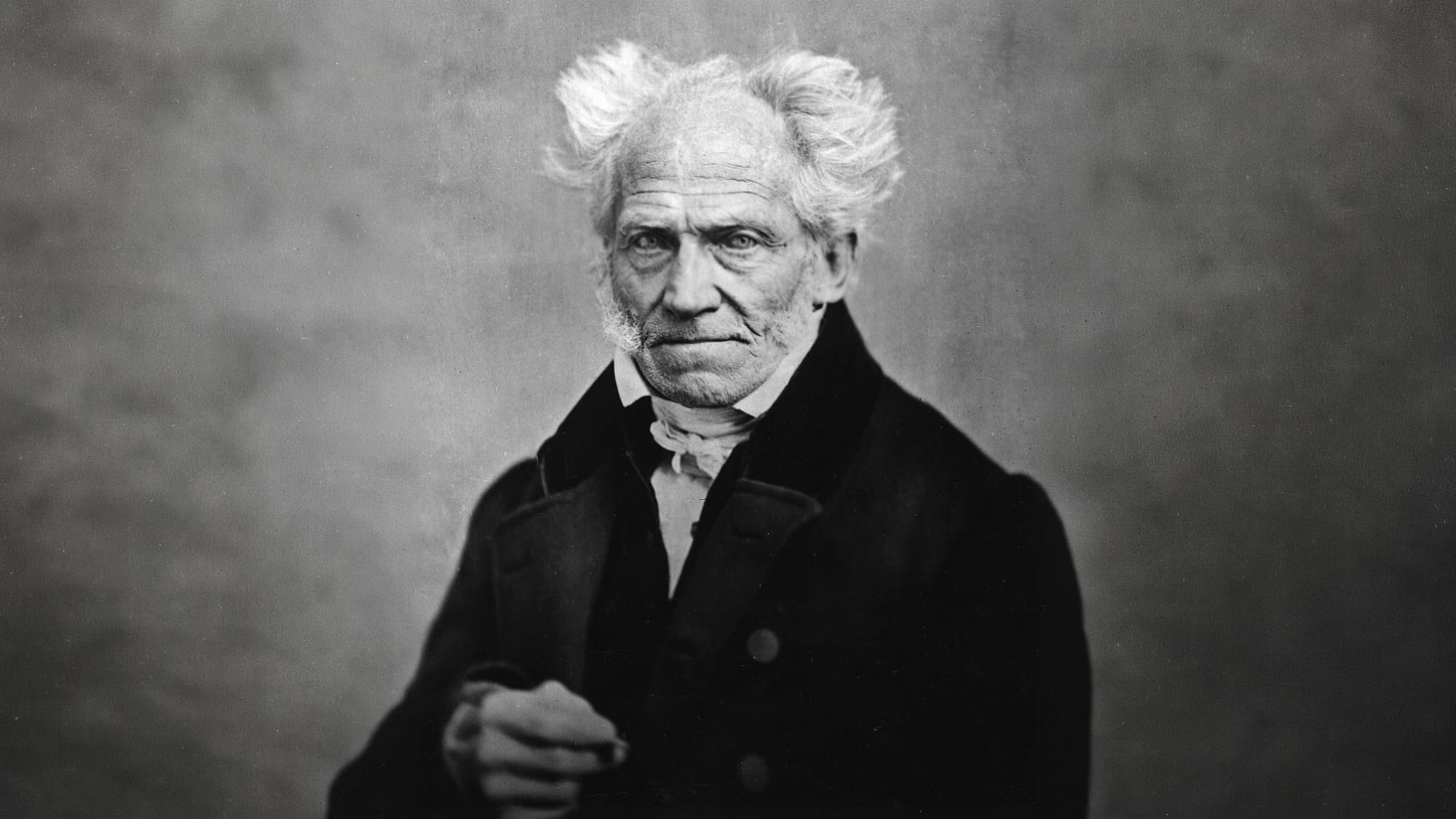
To grasp the system, one must first understand the peculiar receptacle of its creation. Arthur Schopenhauer was born in 1788 in Danzig into a family of wealthy merchants, but his inheritance was not just financial; it was a deep-seated emotional frost. His father, Heinrich, a tense and driven man, died by apparent suicide when Arthur was seventeen, leaving an indelible scar—a stark lesson in the terminal logic of a Will that has no more objects to desire. His mother, Johanna, a successful novelist and socialite, was all vivacious surface; her salon in Weimar was frequented by Goethe, yet she harbored an icy contempt for her son’s brooding genius. Their relationship culminated in a final, devastating rupture where she told him he was unbearable, a wound that festered into his later diatribes about women but, more fundamentally, confirmed his intuition that beneath the mask of sociability, the ego is a solitary, locked cell.
Dismissed by the academic establishment that fawned over Hegel—whom Schopenhauer venomously called a “charlatan” and “windbag”—he retreated into a life of rigid routine in Frankfurt, sharing rooms with a succession of poodles and reading the Upanishads each night before sleep. From this crucible of personal misery and bitter isolation, his magnum opus, The World as Will and Representation (1818, expanded 1844), was forged. It was a work that performed a seismic inversion of Kantian philosophy. Kant had declared the thing-in-itself—the reality beyond our senses—to be unknowable. Schopenhauer, with a stroke of dark brilliance, claimed to have found the key: inwardly, our own body is known to us not merely as a representation, an object among objects, but as Will. The gnawing of hunger, the throb of desire, the blind persistence of the heartbeat—this is the immediate, non-rational, agonizing essence of our being. And by a mighty act of metaphysical extrapolation, he declared that this Will is the single, undifferentiated noumenon pulsing behind the entire phenomenal universe.
This essay is for subscribers only
Join our community to read the full version and unlock the archive.
Subscribe Now